State-of-the-Art Dental Technology in Cambridge, ON
Most dental clinics list a few pieces of equipment on their website. We want to go further than that.
At Cambridge Centre Dental Care, our technology investment is specific and deliberate. Some of it is standard across well-equipped modern practices. Some of it, including hospital-grade general anesthesia and full CBCT 3D imaging in-house, is genuinely hard to find at a general dental clinic anywhere in Ontario. We think patients deserve to know exactly what is available to them before they choose where to get their care.
Here is what we have, what it does, and why it matters.
Digital Imaging and Diagnostics
How clearly we see a problem determines how precisely we can treat it.
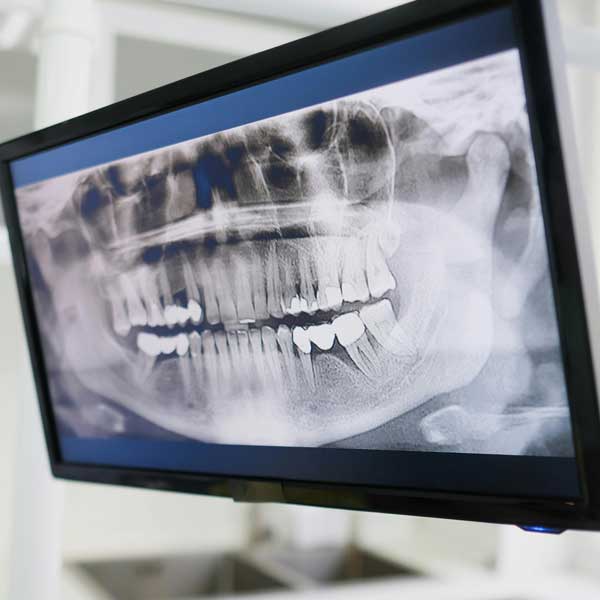
Dexis OP3D CBCT 3D X-Ray System
A standard dental X-ray is flat. The Dexis OP3D gives us a full three-dimensional view of your teeth, jawbone, nerve canals, sinuses, and soft tissue in a single scan taken right here in our Cambridge clinic.
For dental implants, this changes everything. Before Dr. Marwan Elaraby places a single implant, the OP3D has already shown us exactly where your nerves run, the density and volume of your available bone, and the ideal position for each implant. Patients who previously had to travel to imaging centres for a separate CT scan can now have that done on-site, as part of their regular appointment.
The OP3D also supports orthodontic evaluation, TMJ analysis, endodontic planning, airway review, and assessment of impacted teeth. It has built-in dose optimization — the field of view and resolution are adjusted to match what each case actually needs.
3Shape Trios 6 Intraoral Scanner
The Trios 6 is 3Shape’s current flagship clinical scanner, released in 2025. It captures 2,400 images per second and produces a full-colour 3D digital model of your teeth and gum tissue in a few minutes, with no impression material involved.
What sets it apart from earlier scanners is its diagnostic layer. Running the TRIOS Dx Plus software alongside scanning, it can flag early signs of tooth wear, gum recession, plaque accumulation, and occlusal caries during the same appointment. Patients can view their scan on a chairside screen, and our team can send the data directly to a patient’s phone through the 3Shape DentalHealth app.
It is used for crowns, bridges, implant-supported restorations, and orthodontic records.
3Shape Trios 3 Intraoral Scanner
Our second 3Shape scanner runs alongside the Trios 6 so patient appointments and scan workflows are never held up by equipment availability. The Trios 3 produces accurate digital impressions and connects directly with our Invisalign and restorative workflows.
Align iTero Lumina Intraoral Scanner
The iTero Lumina is Align Technology’s latest scanner and the preferred tool for Invisalign planning. It talks directly to Align’s ClinCheck software, which lets our certified Invisalign provider Dr. Michelle Broydell design treatment plans and show patients a digital preview of how their teeth will move before a single aligner is produced.
It also works across crown and bridge cases and integrates with a wide range of lab software platforms.
Sedation and Anesthesia
Sleep and sedation dentistry is one of the services we take most seriously. The equipment behind it reflects that.
Mindray A5 Hospital-Grade Anesthesia Ventilator System
The Mindray A5 is the same class of general anesthesia ventilator used in hospital operating theatres. It is operated by Dr. Firas Al-Qadhi, a certified anesthesiologist who holds his specialist designation from the Royal College of Physicians and Surgeons of Canada, serves as Staff Anesthesiologist at Guelph General Hospital, and holds an appointment as Assistant Clinical Professor at McMaster University.
Patients who need full general anesthesia for their dental treatment can have that done here, without a hospital referral or surgical centre booking. For anyone who has avoided dental care for years because of anxiety, or who has a complex medical history that makes sedation coordination difficult, this is not a small thing.
Lighter options, including oral sedation and IV sedation, are also available. Our team talks through every option during a consultation.
Surgical Precision
LightScalpel CO2 Laser
The LightScalpel CO2 laser operates at a wavelength of 10.6 micrometres, which clinical research identifies as the most effective wavelength for intraoral soft tissue work. It cuts and seals tissue at the same time, which means less bleeding, less post-procedure swelling, and faster healing than a conventional scalpel procedure.
In our clinic it is used for gum recontouring, frenectomies (tongue-tie and lip-tie releases), and minor biopsies. Stitches are often not needed. Recovery tends to be noticeably more comfortable than patients expect going in.
PiezoSurgery Ultrasonic Bone Surgery
PiezoSurgery uses ultrasonic vibration to cut bone. Because the frequency is calibrated specifically to affect hard tissue, nerves, blood vessels, and surrounding soft tissue are largely undisturbed compared to a conventional rotary drill.
Dr. Marwan Elaraby uses it routinely in implant and bone augmentation procedures, including bone grafting, complex extractions, and sinus lifts. The care it allows during bone management has a direct effect on healing and long-term implant outcomes.
GalvoSurge Implant Disinfection System
GalvoSurge uses an electrochemical process to clean and decontaminate implant surfaces before and during placement. A thoroughly clean implant surface supports osseointegration — the process by which the implant bonds with surrounding bone — and helps protect against peri-implantitis, an infection around the implant that is one of the more common causes of implant failure.
It is part of our standard implant protocol, alongside CBCT-guided planning, digital impressions, and in-house surgical guide fabrication.
In-Office Fabrication
SprintRay 3D Printer
Our SprintRay dental 3D printer lets us produce certain clinical items here rather than waiting on outside lab work. Its main role is printing custom surgical guides for implant placement.
When Dr. Marwan Elaraby finishes a pre-surgical plan using CBCT data and digital scans, that plan drives the production of a physical guide that fits precisely over the patient’s teeth and directs drill position and depth during surgery. The entire workflow — from imaging to planning to guide fabrication — happens under one roof.
AI and Clinical Documentation
Heidi AI Clinical Note-Taking
Heidi AI handles clinical documentation during patient appointments. Our dentists stay focused on you rather than on a keyboard. Notes are captured more consistently and accurately, and the clinical record reflects the full scope of care without the gaps that come from trying to document after the fact.
Clinical Photography
Clinical photography supports treatment planning, patient communication, and case documentation across all of our services, particularly cosmetic dentistry.
Our team uses a Sony Alpha camera system and the Xiaomi 15 Ultra, both paired with the Amaran professional lighting system designed for dental environments. Accurate photography lets us document existing conditions clearly, track changes over time, and communicate findings in a way that patients can actually understand. For veneer and cosmetic cases, it also feeds directly into the planning process.
From Scan to Surgery — How It Works Together
The technology on this page is most useful when you see how it connects across a single case.
A patient coming in for dental implants starts with a Dexis OP3D CBCT scan to map bone anatomy and nerve position. That scan merges with a digital impression taken on one of our Trios or iTero scanners. The combined data drives a surgical plan, and a custom guide is printed on the SprintRay. During surgery, Dr. Elaraby uses PiezoSurgery for precise bone management and GalvoSurge for implant site disinfection. If general anesthesia is needed, Dr. Al-Qadhi manages it using the Mindray A5. Throughout, Heidi AI keeps documentation accurate.
No part of that workflow requires a referral out of our clinic. That matters practically — fewer appointments, less coordination, and a clinical team that stays with you from start to finish.
To learn more about the services our technology supports, visit our Services page or contact our team. You can also book an appointment online or call us at 519-624-4640.